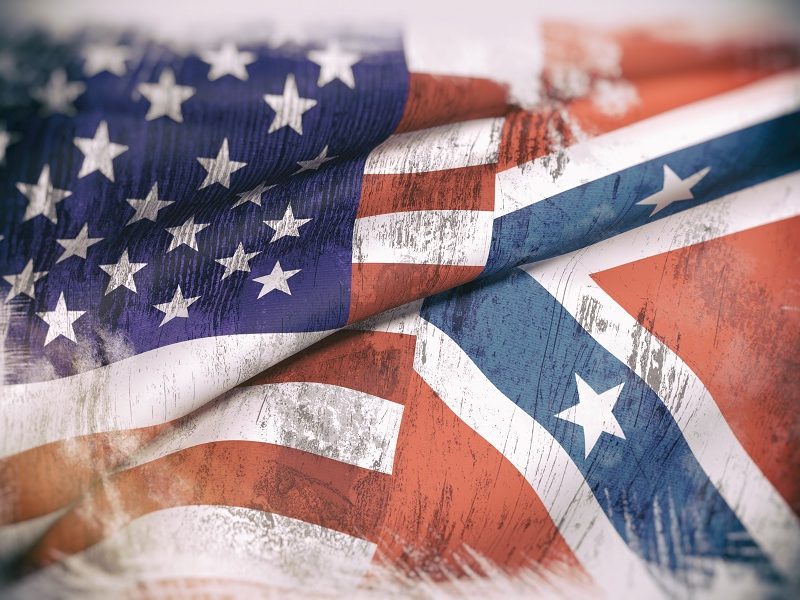
September 17 1861 Monday
Battle of Liberty, MO (CWSAC Limited Battle – Confederate Victory)
Morristown, MO
Cheat Mountain Campaign, West Virginia
Siege of Lexington
Confederate Invasion of New Mexico
Rosecrans’ West Virginia Campaign
CSA. Judah Philip Benjamin succeeded Leroy Pope Walker as acting Secretary of War. Walker wanted to serve in a military capacity and was appointed as a Brigadier-General in the Confederate army.
CSA. Thomas Bragg replaced Judah Philip Benjamin as Attorney General.
Indiana. A train on the Ohio & Mississippi Railroad broke through a bridge near Huron. Part of the Union 19th Illinois Infantry was aboard and 26 of its men were reported killed and 112 injured.
Maryland. Incidents at Point of Rocks and Great Falls.
Mississippi. Incident at Ship Island. A landing party under Captain Melanchthon Smith from USS Massachusetts took possession of the abandoned and incomplete fortifications on Ship Island without facing a shot. The Confederates had evacuated the island on the preceding day. Ship Island’s natural deep-water harbour and its location along a shipping route made it important for the defense of New Orleans and the Gulf Coast. It was also well situated to monitor maritime traffic from the eastern mouths of the Mississippi Delta and Lake Pontchartrain. This was the second foothold to be secured by the US Navy on the Confederate coastline after Hatteras Inlet in North Carolina and it became the base of operations for the Union’s amphibious advance towards New Orleans. As many as 18,000 Union troops were stationed on the island.
Fort Massachusetts was originally built on West Ship Island after the War of 1812 and improved with brick and masonry walls between 1859 and 1866. By early 1861, the outside wall of the fort stood only 6 to 8 feet above the level of the sand. During the summer, the Confederate contingent on the island worked with sandbags and timber to strengthen the walls of the unfinished fort but were forced to abandon the effort on 16 September.
Union ships stopped at the island for repairs and supplies. The 2nd Louisiana Native Guards, one of the first black regiments in the United States Army, were recruited in Louisiana and stationed there for almost three years. In 1862, the fort was informally called Fort Massachusetts in honour of the USS Massachusetts. The fort was never officially named and was usually referred to as the Fort on Ship Island.
Missouri. Union Brigadier-General Benjamin Mayberry Prentiss moved his troops along and to the north of the Hannibal & St Joseph Railroad to protect the area from guerrilla actions by pro-Confederate agitators.
Morristown, Missouri, or Merristown. A Confederate force of 121 men was encamped a short distance northeast of Morristown, about twelve miles west of Harrisonville. The Confederate troops were commanded by Colonel Will Hugh Irwin and were engaged in recruiting for the Missouri State Guard. At daybreak, the camp pickets reported that Union soldiers were approaching from the east. The Union detachment comprised the 5th and the 6th Kansas Cavalry, 1st Battery Missouri Light Artillery, and two companies of the 5th US Infantry. The camp was unprotected and the outnumbered Confederates deployed along a dry streambed which could be used as a trench and its rocky ledges as a parapet. The Union cavalry headed by Colonel Hampton Johnson rode through Morristown’s main street while infantry and two guns moved into position northeast of the Confederate camp. The battle lasted until 8:30 am when the Confederates ordered a retreat. Exploiting their local knowledge of the terrain, they escaped unseen along the stream eastwards to Harrisonville. Union loss was reported as two or three men killed and 6 wounded. The Confederates lost seven men killed.
Liberty, Missouri, also known as Blue Mills Landing or Blue Mills. Union forces attempted to prevent pro-Confederate Missouri State Guards from leaving northern Missouri to cross the Missouri River near the confluence with the Blue River. The secessionists were on their way to reinforce Confederate Major-General Sterling Price at Lexington. Union Lieutenant-Colonel John Scott broke camp at Centreville at 2 am. He arrived in Liberty at 7 am and sent scouts to locate the enemy. Skirmishing began at about 11am. At noon, Scott marched five miles in the direction of the firing and approached Blue Mills Landing on the Missouri River. Scott had a force of about 600 men including detachments of the 3rd Iowa Infantry, some Home Guards, and one 6-pounder gun. Confederate Missouri State Major-General D R Atchison also marched in the direction of the firing and approached Blue Mills Landing. Atchison, who lived in Liberty, deployed his men in the brush on either side of the Missouri River bottomland road leading to the landing. At about 3pm, Scott’s troops encountered the State Guard pickets and were attacked from both sides. Scott’s artillerymen fired two rounds of canister, inflicting heavy losses. However, a fresh volley from the State Guards scattered or killed most of the gunners. Scott ordered his outnumbered force to fall back to the bluffs in Liberty, hauling off the gun by hand. Atchison attempted a flanking movement on the Union right, which resulted in a sharp fight. The Union forces continued to withdraw, firing as they retreated, taking with them nearly all of their wounded, but abandoning their ammunition wagon and a caisson. The State Guard pursued for some distance, but Atchison did not press the attack. Just before nightfall, Scott’s force retired to Liberty, entering the town about an hour after sunset. After sunset, the Union troops returned to retrieve their dead from the field. Atchison and the State Guards from northern Missouri then crossed the river to reinforce Price for his attack on Lexington.
Union losses were reported as 56 and Confederate as 70 men. Ten of the sixteen Union field officers present were killed or wounded. (CWSAC Limited Battle – Confederate Victory)
North Carolina. A landing party led by Lieutenant J Y Maxwell USN from USS Pawnee destroyed Confederate guns and fortifications at Fort Ocracoke on Beacon Island. The fort was in Ocracoke Inlet, two miles to the southwest towards Portsmouth Island. The octagonal earthwork was begun on 20 May 1861 on the site of a fort dating from the War of 1812. As many as 500 Confederate troops were based around Ocracoke and the fort, including several hundred on Portsmouth Island and the beaches further south. Fort Ocracoke was also referred to as Fort Morgan and Fort Morris. After the Union victories on Hatteras Island in August 1861 the Confederates partially destroyed the fort and the Union landing party completed its destruction on 17 September 1861. This effectively closed Ocracoke Inlet to blockade runners
Virginia. The Union operation at Cheat Mountain ended. Union Brigadier-General Joseph Jones Reynolds began preparations for a new offensive against the Confederate forces stationed at Camp Bartow on the Greenbrier River.
Union Organisation
Commander in Chief: President Abraham Lincoln
Vice-President: Hannibal Hamlin
Secretary of War: Simon Cameron
Secretary of the Navy: Gideon Welles
Atlantic Blockading Squadron: Silas Horton Stringham
Gulf Blockading Squadron: William Mervine
Pacific Squadron: John Berrien Montgomery
Western Gunboat Flotilla: Andrew Hull Foote
Potomac Flotilla: Thomas Tingey Craven
General–in-Chief: Winfield Scott
Department of the Cumberland: Robert Anderson awaited
Department of the East: Vacant
Department of Florida: Harvey Brown
Department of the Ohio: William Starke Rosecrans
- Cheat Mountain District: Joseph Jones Reynolds
- District of Grafton: Benjamin Franklin Kelley
- Army of Occupation: William Starke Rosecrans
Department of the Pacific: Edwin Vose Sumner
- District of Oregon: Benjamin Lloyd Beall
- District of Southern California: George Wright awaited
Department of the Potomac: George Brinton McClellan
- Army of the Potomac: George Brinton McClellan
Department of Texas: Vacant
Department of Virginia: John Ellis Wool
Western Department: John Charles Frémont
- District of Western Kentucky: Charles Ferguson Smith
- District of North Missouri: John Pope
- District of Southeast Missouri: Ulysses Simpson Grant
- Southern District of New Mexico: Benjamin Stone Roberts
Confederate Organisation
CSA: Leroy Pope Walker was promoted Brigadier-General PACS 17 September 1861.
Commander in Chief: President Jefferson Finis Davis
Vice-President: Alexander Hamilton Stephens
Secretary of War: Judah Philip Benjamin
Secretary of the Navy: Stephen Russell Mallory
Military Adviser to the President: Robert Edward Lee
Department No 1: David Emanuel Twiggs
- District of Alabama: Jones Mitchell Withers
Department of Fredericksburg: Daniel Harvey Hill
- District of Aquia: vacant
Department of Middle and Eastern Florida: John Breckinridge Grayson
Department of Norfolk: Benjamin Huger
Department of North Carolina: Richard Caswell Gatlin
- Defences of North Carolina: Theophilus Hunter Holmes interim Joseph Reid Anderson awaited
Department of the Peninsula: John Bankhead Magruder
- Army of the Peninsula: John Bankhead Magruder
Department of the Potomac: Joseph Eggleston Johnston
- Army of the Potomac: Joseph Eggleston Johnston
- Army of the Valley: Thomas Jonathan Jackson
Department of South Carolina: Roswell Sabine Ripley
Department of Southwestern Virginia: William Wing Loring
Department of Texas: Henry Eustace McCullough temporary Paul Octave Hébert awaited
- Defences of Galveston: John Creed Moore
Department of West Florida: Braxton Bragg
- “Forces in Pensacola”: Braxton Bragg
Western Department: Albert Sidney Johnston
- First Geographical Division: Leonidas Polk
- District of Upper Arkansas: William Joseph Hardee
- District of the Indian Territory: Benjamin McCulloch
- Western Army: Benjamin McCulloch
- District of East Tennessee: Felix Kirk Zollicoffer
Defences of Savannah: Alexander Robert Lawton
Forces in Richmond: Charles Dimmock
Army of the Kanawha: John Buchanan Floyd
Army of the Northwest: William Wing Loring
Union Generals
Note: Italics, awaiting confirmation of the commission
Major-General USA
Winfield Scott
George Brinton McClellan
John Charles Frémont
Henry Wager Halleck
Major-General USV
John Adams Dix
Nathaniel Prentiss Banks
Benjamin Franklin Butler
David Hunter
Brigadier-General USA
John Ellis Wool
William Selby Harney
Edwin Vose Sumner
Joseph King Fenno Mansfield
Irvin McDowell
Robert Anderson
William Starke Rosecrans
Brigadier-General USV
Samuel Peter Heintzelman
Erasmus Darwin Keyes
Andrew Porter
Fitz-John Porter
William Buel Franklin
William Tecumseh Sherman
Charles Pomeroy Stone
Don Carlos Buell
Thomas West Sherman
John Pope
George Archibald McCall
William Reading Montgomery
Philip Kearny
Joseph Hooker
John Wolcott Phelps
Ulysses Simpson Grant
Joseph Jones Reynolds
Samuel Ryan Curtis
Charles Smith Hamilton
Darius Nash Couch
Rufus King
Jacob Dolson Cox
Stephen Augustus Hurlbut
Franz Sigel
Robert Cumming Schenck
Benjamin Mayberry Prentiss
Frederick West Lander
Benjamin Franklin Kelley
John Alexander McClernand
Alpheus Starkey Williams
Israel Bush Richardson
James Cooper
James Brewerton Ricketts
Orlando Bolivar Willcox
Michael Corcoran
George Henry Thomas
Ambrose Everett Burnside
Henry Hayes Lockwood
Louis Blenker
Henry Warner Slocum
James Samuel Wadsworth
John James Peck
Ormsby McKnight Mitchel
George Webb Morell
John Henry Martindale
Samuel Davis Sturgis
George Stoneman
Henry Washington Benham
William Farrar Smith
James William Denver
Egbert Ludovicus Vielé
James Shields
John Fulton Reynolds
William Farquhar Barry
John Joseph Abercrombie
John Sedgwick
Charles Ferguson Smith
Silas Casey
Lawrence Pike Graham
George Gordon Meade
Abram Duryée
Alexander McDowell McCook
Oliver Otis Howard
Eleazar Arthur Paine
Daniel Edgar Sickles
Charles Davis Jameson
Ebenezer Dumont
Robert Huston Milroy
Lewis Wallace
Willis Arnold Gorman
Daniel Butterfield
Horatio Gouverneur Wright
Edward Otho Cresap Ord
William Nelson
Brigadier-General USA (Staff)
Montgomery Cunningham Meigs (Quartermaster-General)
Henry Knox Craig
Lorenzo Thomas (Adjutant-General)
James Wolfe Ripley (Ordnance)
Confederate Generals
Note: Italics, awaiting confirmation of the commission
General ACSA
Samuel Cooper
Albert Sidney Johnston
Robert Edward Lee
Joseph Eggleston Johnston
Pierre Gustave Toutant Beauregard
Major-General PACS
David Emanuel Twiggs
Leonidas Polk
Braxton Bragg
Brigadier-General PACS
Alexander Robert Lawton
Milledge Lake Bonham
Benjamin McCulloch
William Wing Loring
Charles Clark
John Buchanan Floyd
William Henry Talbot Walker
Henry Rootes Jackson
Theophilus Hunter Holmes
Henry Alexander Wise
Earl Van Dorn
William Joseph Hardee
Richard Stoddert Ewell
David Rumph Jones
Benjamin Huger
John Bankhead Magruder
James Longstreet
Edmund Kirby Smith
John Clifford Pemberton
Thomas Jonathan Jackson
Henry Hopkins Sibley
John Henry Winder
Richard Caswell Gatlin
Daniel Smith Donelson
Samuel Read Anderson
Gideon Johnson Pillow
Benjamin Franklin Cheatham
Felix Kirk Zollicoffer
Daniel Harvey Hill
Jones Mitchell Withers
Richard Heron Anderson
Robert Augustus Toombs
Samuel Jones
Arnold Elzey
William Henry Chase Whiting
Jubal Anderson Early
Isaac Ridgway Trimble
Daniel Ruggles
George Bibb Crittenden
John Breckinridge Grayson
Roswell Sabine Ripley
Albert Pike
Paul Octave Hébert
Joseph Reid Anderson
Simon Bolivar Buckner
Leroy Pope Walker
 American Civil War High Command