February 18 1861 Monday
Inauguration of Jefferson Finis Davis as Confederate President
Fort Wise Treaty
San Antonio, TX
CSA. The capital city of the Confederate States was established in Montgomery, Alabama.
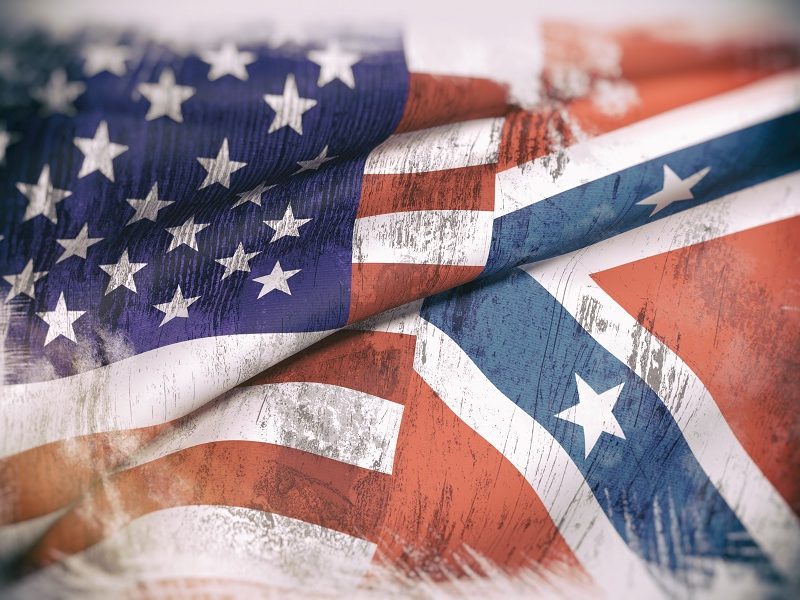
CSA. Jefferson Finis Davis was inaugurated as President of the Confederate States government for a term of six years. Alexander Hamilton Stephens was confirmed as Vice-President. The celebrated tune “Dixie” was played for the first time as a Confederate anthem during Davis’s Inauguration.
Arkansas. The state of Arkansas elected delegates to the state convention.
Fort Wise Treaty, Colorado Territory. By the terms of the 1851 Treaty of Fort Laramie between the United States and seven Indian nations, including the Cheyenne and Arapaho nations, the USA recognized that the Cheyenne and Arapaho held a vast territory encompassing the lands between the North Platte River and Arkansas River and eastward from the Rocky Mountains to western Kansas. This area included the area of present-day south-eastern Wyoming, southwestern Nebraska, most of eastern Colorado, and the westernmost portions of Kansas. In November 1858, however, the discovery of gold in the Rocky Mountains in Colorado, then part of the Kansas Territory, brought on the Pikes Peak Gold Rush. There was a flood of European-American migrants across Cheyenne and Arapaho lands. They competed for resources and some settlers tried to stay. Colorado Territorial officials put pressure on the Federal authorities to redefine the extent of Indian lands in the territory, and in the fall of 1860, A B Greenwood, Commissioner of Indian Affairs, arrived at Bent’s New Fort along the Arkansas River to negotiate a new treaty. Six chiefs of the Southern Cheyenne and four of the Arapaho signed the Treaty of Fort Wise in which they ceded most of the lands designated to them by the Fort Laramie treaty. The Cheyenne chiefs included Black Kettle, White Antelope, Lean Bear, Little Wolf, and Tall Bear; the Arapaho chiefs included Little Raven, Storm, Shave-Head, Big Mouth, and Left Hand. The new reserve lands, comprising less than one-thirteenth the size of the 1851 reserve, were located in eastern Colorado between the Arkansas River and Sand Creek. Some bands of Cheyenne, including the Dog Soldiers, a militaristic band of Cheyenne and Lakota that had evolved since the 1830s, were angry at the chiefs who had signed the treaty. They disavowed the treaty and refused to abide by its constraints. They continued to live and hunt in the bison-rich lands of eastern Colorado and western Kansas, becoming increasingly belligerent over the tide of white migration across their lands. Tensions were high particularly in the Smoky Hill River country of Kansas, along which American settlers had opened a new trail to the goldfields. Cheyenne who opposed the treaty said that it had been signed by only a small minority of the chiefs without the consent or approval of the rest of the tribe; that the signatories had not understood what they signed; and that they had been bribed to sign by a large distribution of gifts. The Americans, however, claimed that the treaty was a “solemn obligation” to be obeyed. Officials took the position that any Indians who refused to abide by the treaty were to be considered hostile belligerents.
Maryland. The Maryland State Conference Convention met and insisted upon a meeting of the Maryland legislature. At a meeting in Howard County, Maryland, addressed by Speaker of the House of delegates, E G Kilbourn, a resolution was adopted that “immediate steps ought to be taken for the establishment of a Southern Confederacy, by consultation and co-operation with such other Southern and Slave States as may be ready therefor.”
New York. US President-elect Abraham Lincoln made speeches at Albany and New York, still attempting to reconcile differences between the Union and the seceded States
San Antonio, Texas. Confederate Captain John Robert Baylor had secretly gathered 1,000 men under the ruse of a “buffalo hunt” and these were joined in San Antonio by a company of Texas Rangers under Captain Benjamin McCulloch. The secessionist force put increasing pressure on US Brigadier-General David Emanuel Twiggs whose headquarters of the Department of Texas was in the town. Twiggs’ command included about a fifth of the US Army guarding the Mexican border and conducting operations against the Native Americans. He met a trio of Confederate commissioners, including Philip Noland Luckett and Samuel Augustus Maverick. Twiggs surrendered his entire command, including the Federal installations, property, and soldiers in Texas to the Confederacy. This included 20 military posts including the US Arsenal at the Alamo, 44 guns, 400 pistols, 1,900 muskets, 500 wagons, and 950 horses, valued at $1.6 million. He insisted that all soldiers be allowed to retain personal arms and sidearms, flags and standards, and to withdraw unmolested. In other regions, many officers with Southern sympathies handed over their military commands properly to the US authorities in an appropriate fashion before resigning. but Twiggs was the only US Regular Army officer, and the most senior, to surrender Federal property before the formal declaration of secession. Since Texas had not yet ratified the ordinance of secession, Twiggs committed what some considered a treasonous act. He later resigned his commission to join the Confederacy as a Major-General but was dismissed from the US Army on 1 March 1861 in advance of his defection.
Union Organisation
USA: Command of the Department of Texas became vacant following the surrender of all military property by Brigadier-General USA David Emanuel Twiggs to the Confederacy.
Commander in Chief: President James Buchanan
Vice-President: John Cabell Breckinridge
Secretary of War: Joseph Holt
Secretary of the Navy: Isaac Toucey
African Squadron: William Inman
Brazil Squadron: Joshua Ratoon Sands
East Indian (Asiatic) Squadron: Cornelius Kinchiloe Stribling
European Squadron: vacant
Home Squadron: Garrett J Prendergast
Mediterranean Squadron: Charles H Bell
Pacific Squadron: John Berrien Montgomery
General–in-Chief: Winfield Scott
Department of the East: John Ellis Wool
Department of New Mexico: Thomas Turner Fauntleroy interim, William Wing Loring awaited
Department of the Pacific: Albert Sidney Johnston
- District of Oregon: George Wright
Department of Texas: vacant
Department of Utah: Philip St George Cooke
Department of the West: William Selby Harney
Confederate Organisation
President: Jefferson Finis Davis
Vice-President: Alexander Hamilton Stephens
Union Generals
Major-General USA
Winfield Scott
Brigadier-General USA
John Ellis Wool
David Emanuel Twiggs
William Selby Harney
Brigadier-General USA (Staff)
Joseph Eggleston Johnston
 American Civil War High Command